
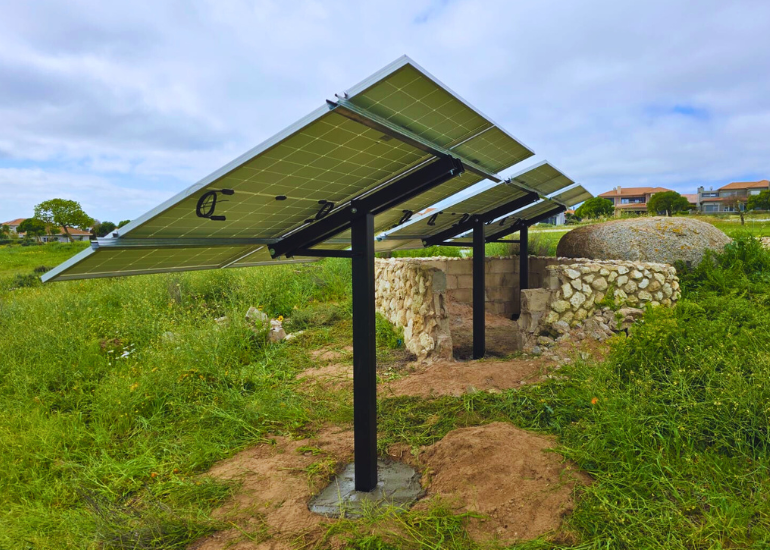
Across South Africa, irrigation planning is no longer only about water; it’s about energy security.
As electricity prices rise and grid instability continues across the country, farms, estates, and commercial properties are all asking the same question: how can we keep irrigation running reliably when power is uncertain?
Solar-Powered Irrigation Systems (SPIS) are becoming a key solution. More than just an alternative energy source, solar irrigation is a move toward resilient, self-sufficient water management built for South Africa’s needs.
Why Solar Irrigation Makes Sense Now
Traditional irrigation systems depend on grid electricity or diesel generators, which can lead to unpredictable costs. Solar power changes this situation.
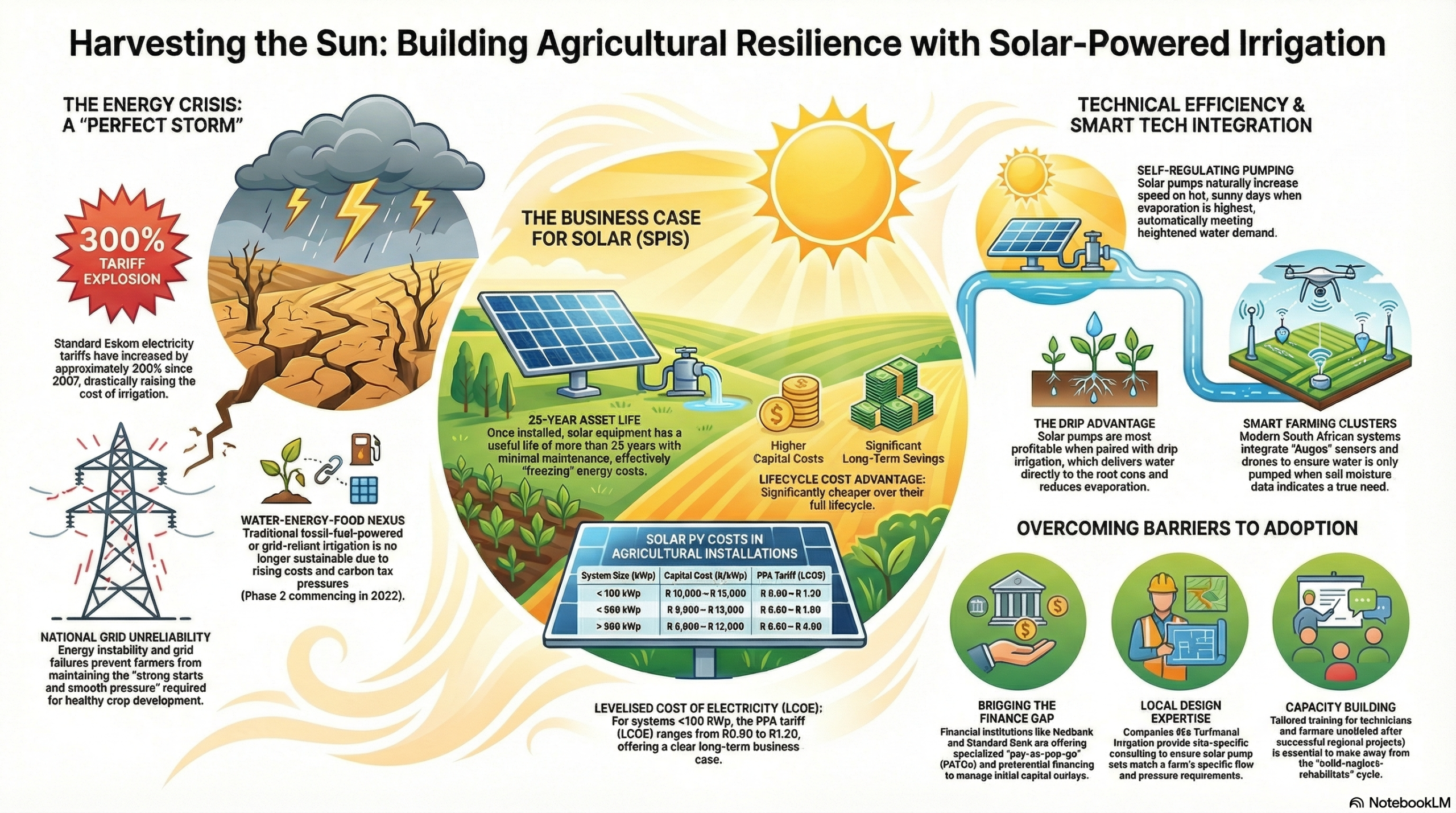
Although solar systems cost more to install at first, they offer major long-term benefits. Once set up, solar equipment can run for over 25 years with low maintenance, helping to keep energy costs steady even as electricity prices go up.
The real benefit is how well solar power matches irrigation needs.
On hot, sunny days, when plants need more water and evaporation is higher, solar systems produce the most energy. Pumps work best when irrigation demand is highest, creating a balanced system without extra effort.
In practice, this leads to steady pressure, consistent water supply, and fewer interruptions during important growing times.
Smart Technology Makes Solar Even Smarter
Today’s solar irrigation systems are often part of smart water management setups, not just stand-alone units.
When solar pumps are used with monitoring tools and smart sensors, operators can see how the system is working in real time. Remote monitoring and analytics help teams track flow, pressure, and pump performance, often spotting problems before they cause failures.
Backup systems and automated controls make irrigation even more reliable, keeping schedules on track even when conditions change.
The outcome is not only renewable energy, but also smarter infrastructure.
Maximising Efficiency: Water and Energy Working Together
Solar irrigation works best when combined with efficient ways of applying water.
Drip irrigation, for example, works very well with solar pumps. By sending water straight to plant roots, drip systems cut down on evaporation and save energy. Pumping less water means using less energy, making the system even more efficient.
In many parts of Africa, and more often now in South Africa, new farming methods use solar power along with soil-moisture sensors, automated schedules, and precise monitoring. These setups make sure water is pumped only when needed, easing the workload and helping crops grow better.
Efficiency now comes from combining different technologies, not just using one.
Understanding the Barriers and How They’re Being Solved
Even with its clear benefits, solar irrigation has been adopted more slowly than expected. The main challenge is the upfront cost, along with the need for technical know-how to design the system correctly.
Solar irrigation isn’t a simple, one-size-fits-all solution. Pump size, pressure, water source, and irrigation needs all have to match up. If these aren’t aligned, the system may not work well, so professional design is very important.
New ways of financing, like flexible funding and staged investments, are helping to make solar irrigation more affordable and easier to adopt without hurting cash flow.
Local technical know-how is just as important. Designing systems for each site makes sure solar pumps are built for real conditions, like borehole output, land features, crop needs, and irrigation timing.
A Shift Toward Long-Term Resilience
For many estates, farms, and businesses, solar irrigation is about more than saving energy. It’s a shift from constantly fixing problems to building systems that last and stay reliable over time.
With decentralised energy, irrigation can keep running even if the national grid has problems. This protects crops, landscapes, and planning from outside disruptions.
As water becomes scarcer and energy costs rise in Southern Africa, solutions that combine renewable power, smart monitoring, and efficient irrigation are quickly becoming the norm.
Looking Ahead
Solar-powered irrigation isn’t about changing everything at once. It’s about building smarter, more resilient systems that work with the environment instead of against it.
With good planning, the right technology, and skilled installation, solar irrigation can provide steady water management, stable costs, and lasting results for many years.
If you’re thinking about solar irrigation or want to make your system more future-ready, the TMI team can help you check what’s possible, choose the right size, and find the best setup for your site.
Because resilient irrigation starts with intelligent design.
