
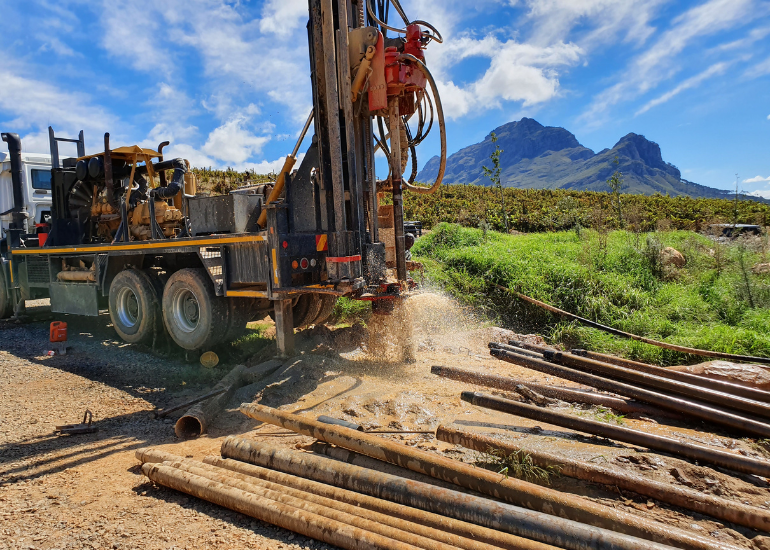
Installing a borehole can feel like unlocking independence, a reliable water source, reduced reliance on municipal supply, and long-term savings. But beneath the surface, boreholes are far more than “just drilling a hole and adding a pump.”
A successful borehole is the result of testing, design, correct equipment selection, and long-term planning. Without these elements, boreholes can quickly become expensive, unreliable, or even unusable.
This guide breaks down what goes into a borehole, what questions to ask before drilling, and how to turn a borehole into a complete, efficient water solution.
Why Borehole Testing Is Non-Negotiable
Before any drilling begins, testing is the most critical step. It determines whether the site can sustainably supply water, and whether that water is suitable for its intended use.
Proper testing evaluates:
- Groundwater presence and yield
- Static and dynamic water levels
- Soil and rock conditions
- Water quality and chemistry
- Long-term sustainability
Skipping this step risks dry boreholes, undersized pumps, system failures, or investing in drilling that never delivers meaningful water.
A borehole should be designed with confidence, not hope.
Modern Borehole Investigation: Why Guesswork No Longer Cuts It
Gone are the days when borehole drilling relied purely on best guesses and crossed fingers. Today, successful boreholes are increasingly driven by data, technology, and informed decision-making before a drill rig ever arrives on site.
At TMI, we’ve expanded our borehole offering by working alongside specialist drilling teams who use advanced site investigation tools to dramatically reduce risk and improve outcomes.
One of the most valuable technologies now available is ERT scanning (Electrical Resistivity Tomography). This technology allows us to map subsurface conditions and potential water-bearing zones to depths of up to 300 metres, providing a far clearer picture of what’s happening below ground.
In practical terms, this means:
• Better borehole positioning
• Reduced risk of dry or low-yield wells
• More accurate depth planning
• Greater confidence before drilling begins
While traditional divining still plays a role on many sites, ERT scanning adds a scientific layer of confirmation, especially valuable on complex sites, commercial properties, and agricultural land where demand and investment are higher.
What if you already have a borehole?
Not every project starts with drilling a new hole. In many cases, properties already have an existing borehole that has underperformed, collapsed, silted up, or simply stopped delivering reliable water.
Modern borehole assessments can include:
• Camera inspections to identify blockages, collapses, or casing failures
• Compressed air cleaning to improve yield
• Re-sleeving of damaged wells
• Re-opening or deepening existing boreholes where conditions allow
This approach often saves time and cost, while extending the usable life of an existing water source, something many property owners don’t realise is even possible.
What if you already have a borehole?
Not every project starts with drilling a new hole. In many cases, properties already have an existing borehole that has underperformed, collapsed, silted up, or simply stopped delivering reliable water.
Modern borehole assessments can include:
• Camera inspections to identify blockages, collapses, or casing failures
• Compressed air cleaning to improve yield
• Re-sleeving of damaged wells
• Re-opening or deepening existing boreholes where conditions allow
This approach often saves time and cost, while extending the usable life of an existing water source, something many property owners don’t realise is even possible.
Reducing Risk Through Accountability
Drilling will always involve natural variables; geology can’t be controlled, but professional borehole projects minimise risk through transparency and accountability.
That’s why every new borehole we deliver is fully inspected before handover, ensuring construction quality and confirming conditions inside the well. Where new drilling is undertaken, risk-sharing models such as “no water, no drilling charge” (excluding unrecoverable casing) help protect clients from unnecessary expense.
It’s about confidence, knowing that the decisions being made are informed, responsible, and backed by experience.
Boreholes Are Not One-Size-Fits-All
One of the most common mistakes is assuming all boreholes serve the same purpose. In reality, the design must match how the water will be used.
Residential Properties
For homes, estates, and lifestyle properties, boreholes are typically used for irrigation and garden maintenance.
Key considerations include:
- Moderate water demand
- Quiet operation and minimal visual impact
- Automation for ease of use
- Water quality that won’t damage plants, paving, or irrigation systems
A well-designed residential borehole system should operate quietly in the background, delivering consistent water without constant attention.
Commercial, Schools & Institutional Sites
At schools, business parks, estates, and sports facilities, boreholes form part of a larger operational ecosystem.
These systems often require:
- Consistent yield across large irrigation areas
- Stable pressure for multiple zones
- Storage and redundancy
- Monitoring to support maintenance teams
In these environments, boreholes are integrated into pump stations, central controllers, and maintenance programs where reliability and uptime are essential.
Agricultural Applications
In agriculture, boreholes are not a convenience, they are a production input.
Agricultural systems must account for:
- High and sustained yield
- Seasonal drawdown
- Water chemistry affecting soil and crops
- Precise irrigation delivery
- Energy efficiency
Here, boreholes are carefully matched to crop requirements, irrigation methods, and fertigation strategies. Poor design directly impacts yield and profitability.
Borehole Myths vs Facts
Myth: If there’s water underground, a borehole will always work.
Myth: Deeper is always better.
Myth: Any pump will work, it can be adjusted later.
Myth: Borehole water is free water.
Myth: Once installed, a borehole needs no attention.
Turning a Borehole Into a Complete Water Solution
A borehole on its own is only the starting point. What makes it successful is how it’s protected, controlled, and integrated.
Pump Protection & Reliability
Key additions include:
- Dry-run protection to prevent pump damage
- Timers and intelligent sequencing
- Variable Speed Drives (VSDs) for smooth operation and energy efficiency
These features significantly extend pump lifespan and reduce costly breakdowns.
Automation & Smart Control
Modern borehole systems benefit from:
- Smart irrigation controllers
- Weather-based scheduling
- Zoned irrigation aligned with plant and soil requirements
Automation ensures water is applied only when and where it’s needed.
Monitoring & Tracking Systems
With live monitoring, systems can track:
- Flow rates and pressure
- Pump performance
- Abnormal behaviour or failures
Remote alerts often identify problems before visible damage occurs, saving water, energy, and time.
Water Quality Management
Depending on borehole chemistry, systems may require:
- Filtration for sand, iron, or organic material
- Water conditioning or softening
- Regular flushing routines
Protecting water quality protects everything downstream, pipes, pumps, irrigation equipment, soil, and plants.
Rain & Soil Sensors
Adding rain and soil moisture sensors allows irrigation systems to respond to real conditions, not assumptions, preventing over-watering, especially in windy or dry climates.
Decision Guide: Is a Borehole Right for You?
A borehole can be a powerful long-term water solution, but it isn’t the right answer for every property or application. This guide will help you decide whether investing in a borehole makes sense for your site, usage needs, and long-term goals.
Think of it as a practical checklist, not a sales pitch.
Step 1: Why Are You Considering a Borehole?
Start with the real reason you’re exploring a borehole. The motivation matters.
A borehole may be a good fit if you want to:
- Reduce reliance on municipal water
- Secure irrigation water during restrictions
- Lower long-term water costs
- Improve reliability for landscapes, sports fields, or crops
- Create redundancy for critical water use
If your goal is short-term savings only, a borehole may not deliver the return you expect. Boreholes work best as long-term infrastructure, not quick fixes.
Step 2: How Will the Water Be Used?
Different uses require very different borehole designs.
Residential Use
- Garden and landscape irrigation
- Small-scale storage tanks
- Intermittent use
✔ Often suitable, provided yield and quality are adequate.
Commercial / Institutional Use
- Sports fields, estates, schools
- Continuous or scheduled irrigation
- Multiple zones and users
✔ Suitable, but requires professional design, monitoring, and redundancy.
Agricultural Use
- Crop irrigation
- High-volume, long-duration pumping
- Seasonal demand fluctuations
✔ Highly suitable, but only with proper testing, pump sizing, and energy planning.
If your water demand is high or time-sensitive, testing and system design become non-negotiable.
Step 3: Is Your Site Suitable?
Not every site is ideal for a borehole.
Before drilling, ask:
- Has groundwater been successfully accessed nearby?
- What is the expected depth to water?
- Are there geological or environmental constraints?
- Is space available for drilling equipment and infrastructure?
A professional hydrogeological assessment or test bore provides clarity and prevents costly assumptions.
Step 4: Are You Prepared for the Full System?
A borehole is not just a hole and a pump.
A complete system typically includes:
- Correctly sized pump and motor
- Electrical supply and protection
- Filtration and water quality management
- Control panels or automation
- Irrigation or distribution infrastructure
- Monitoring and maintenance planning
If the plan stops at “we’ll add the rest later,” the system will almost always underperform.
Step 5: Do You Understand the Ongoing Costs?
While boreholes reduce water bills, they introduce other operating costs.
Plan for:
- Electricity usage
- Pump servicing and replacement
- Filtration maintenance
- Periodic water testing
- System monitoring
A well-designed system minimises these costs, a poorly designed one amplifies them.
Step 6: Do You Need Backup or Redundancy?
Boreholes are reliable, but no system should operate in isolation.
Consider:
- Storage tanks for buffering demand
- Municipal or alternative water backup
- Dry-run protection and alarms
- Redundant pumps for critical applications
Resilience is part of good water design.
Step 7: Ask Yourself These Final Questions
If you answer yes to most of the following, a borehole is likely worth serious consideration:
- Do I need a reliable, independent water source?
- Am I planning for long-term use (5–10+ years)?
- Am I willing to test before drilling?
- Do I want a system designed for efficiency, not guesswork?
- Do I understand that water quality matters as much as water quantity?
If several answers are no, it may be worth exploring alternative water strategies first.
The Bottom Line
A borehole is a strategic investment, not a universal solution.
When done properly, it delivers:
- Water security
- Operational resilience
- Long-term cost control
- Smarter irrigation outcomes
When rushed or under-designed, it becomes an ongoing frustration.
The right question isn’t “Can we drill?”
It’s “Should we, and how should it be done?”
If you’d like help answering that question, a professional assessment is always the best place to start.
The Bigger Picture
A borehole is not just a drilling project, it’s a long-term water strategy.
When testing, design, pumping, filtration, automation, and monitoring work together, the result is:
- Reliable water supply
- Improved plant health
- Reduced waste
- Lower operational stress
- Smarter use of a valuable resource
At TMI, we help clients move beyond “just drilling a hole” and toward fully integrated water systems that operate efficiently, quietly, and sustainably.
Smart water starts below the surface, but success is built above it.
