
When people think about irrigation, they often picture sprinklers turning on and off.
But in reality, a high-performing irrigation setup is far more than that. It’s a connected system, one where water sourcing, pumping, control, and distribution all work together to deliver consistent, efficient results.
And when one part of that system is overlooked, the entire system underperforms.
Whether you’re managing a golf course, estate, school, farm, or commercial landscape, the difference between a working irrigation system and a high-performing one comes down to how well the full water system has been designed.
It Starts Below the Surface: Water Source Matters
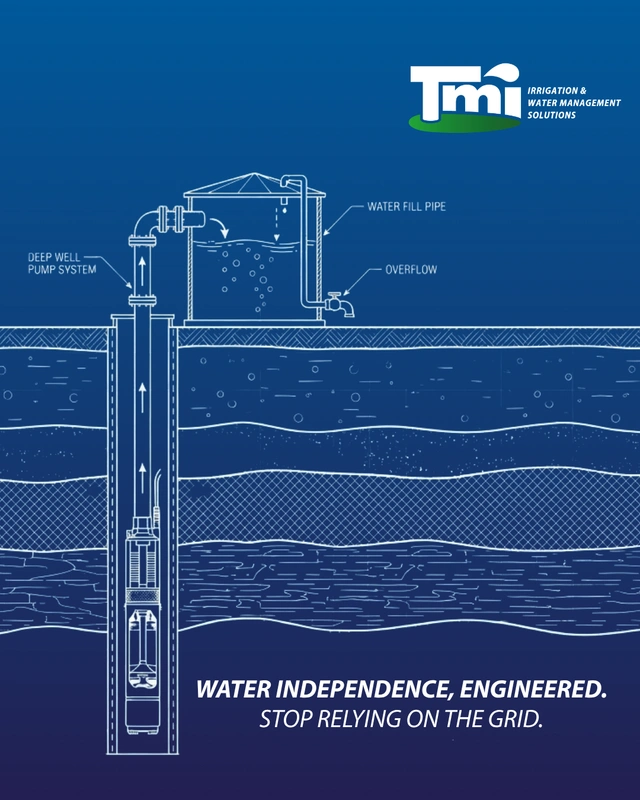
Every irrigation system begins with one simple question: where is the water coming from?
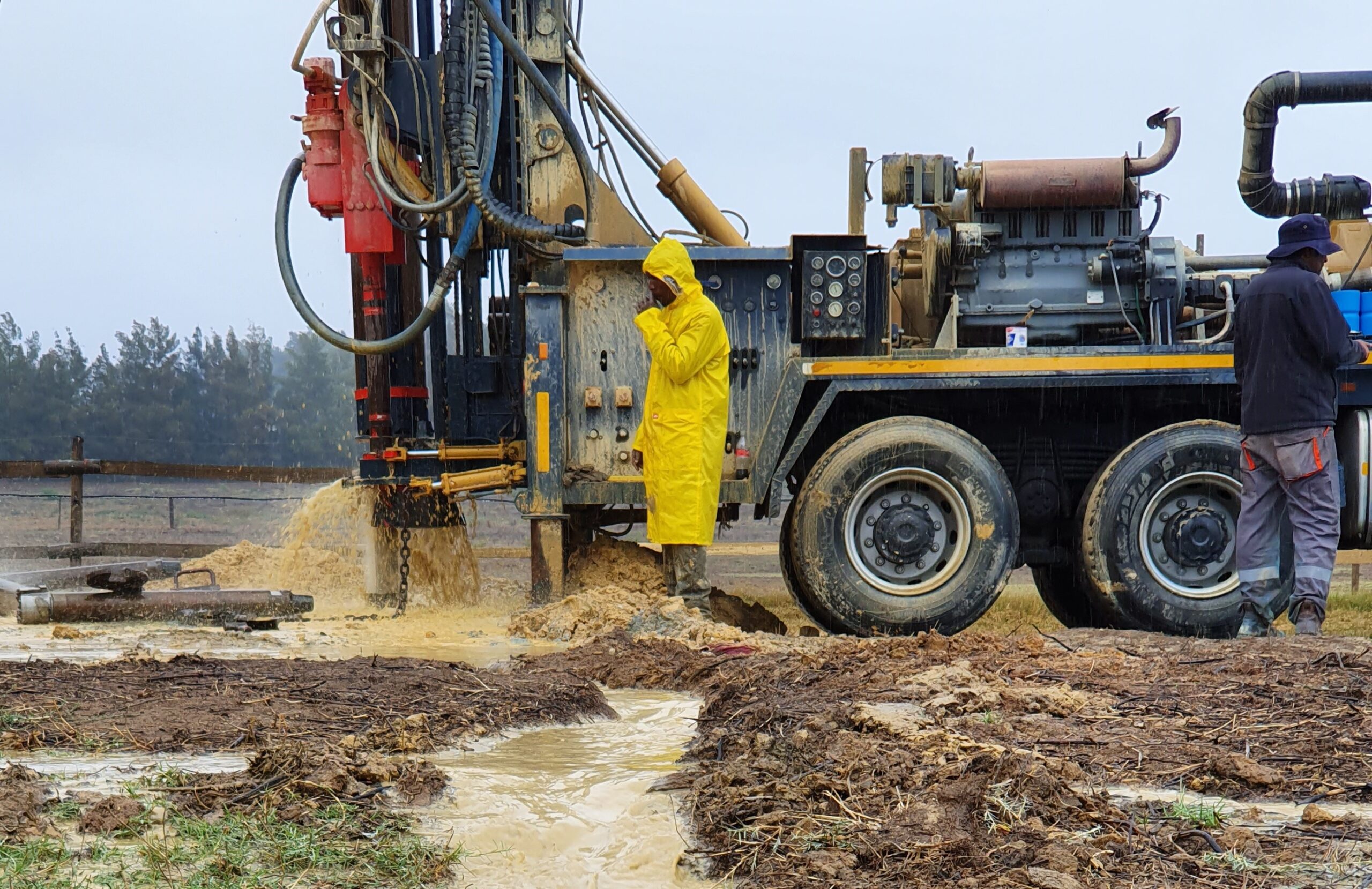
For many properties, this is where boreholes are becoming increasingly important. With growing pressure on municipal supply and rising costs, boreholes offer a level of independence and long-term reliability that traditional sources often can’t.
But not all boreholes are equal, and more importantly, a borehole on its own doesn’t guarantee a successful irrigation system.
Modern borehole development now relies on advanced site investigation, improved drilling methods, and proper system integration. When done correctly, it provides a stable foundation for everything that follows.
When done incorrectly, it creates limitations that no amount of irrigation design can fix later.
The Engine Room: Pumping and Pressure
Once water is available, the next critical step is moving it, efficiently and consistently.
Pump stations are the engine of any irrigation system. They determine:
- How much water can be delivered
- How consistently pressure is maintained
- How efficiently energy is used
- How reliably the system performs over time
Incorrect pump sizing or poor pressure management is one of the most common reasons irrigation systems fail to meet expectations.
Too little pressure leads to poor coverage and dry areas. Too much pressure causes misting, water loss, and equipment wear. Fluctuating pressure creates inconsistency across zones.
A well-designed pump system ensures that water is delivered at the right volume, at the right pressure, exactly when it’s needed.
Protecting the System: Filtration and Water Quality
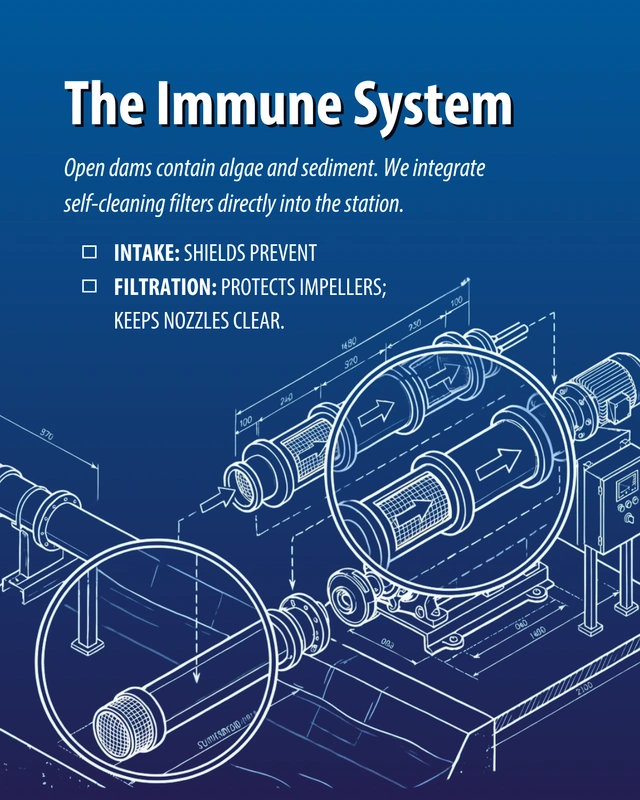
Water quality is often underestimated until it starts causing problems.
Whether the source is a borehole, a dam, or a municipal supply, water can carry sand, organic material, or dissolved minerals that affect system performance over time.
Without proper filtration and conditioning:
- Sprinklers and drip lines clog
- Pumps experience increased wear
- Pressure becomes inconsistent
- Maintenance costs increase
Designing around water quality from the start protects the entire system, not just the irrigation components, but the landscape or crops it supports.
Smarter Control: Automation and Scheduling
One of the biggest shifts in modern irrigation is control.
Systems are no longer manually operated or based on fixed timers alone. Today’s irrigation is increasingly driven by intelligent control systems that adjust based on real conditions.
This includes:
- Automated scheduling aligned with plant needs
- Weather-based adjustments
- Zoned irrigation for different areas
- Integration with pump stations and water sources
Automation removes guesswork and ensures water is applied efficiently, reducing waste while improving consistency.
Visibility and Control: Monitoring and Data
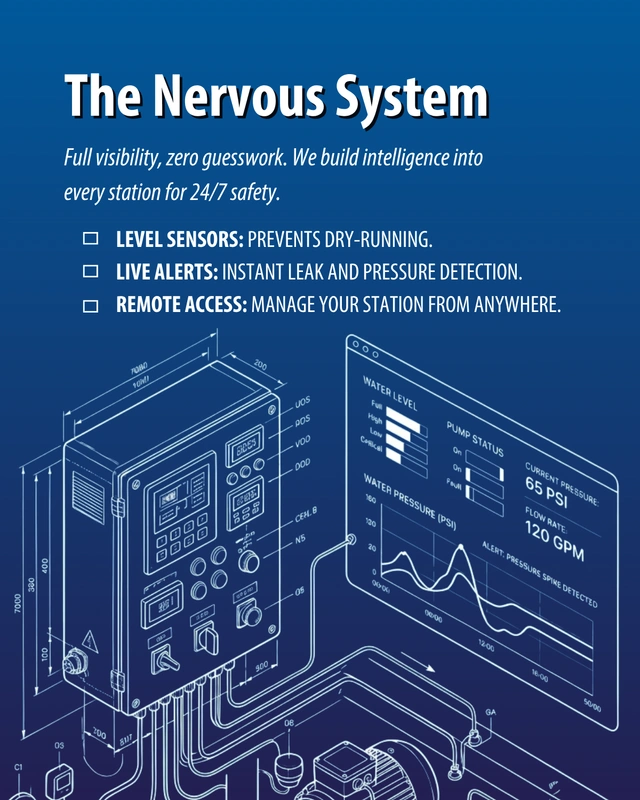
You can’t manage what you can’t see.
Modern irrigation systems are increasingly supported by monitoring platforms that provide real-time insight into system performance. From flow rates and pressure to pump activity and fault detection, these tools allow operators to stay ahead of problems.
Instead of reacting to failures, teams can:
- Identify inefficiencies early
- Respond to alerts before damage occurs
- Track performance over time
- Make informed operational decisions
This level of visibility transforms irrigation from a reactive task into a managed system.
Bringing It All Together
A borehole, a pump, and an irrigation layout on their own do not create a reliable system.
It’s the integration between these elements that defines success.
A complete water system considers:
- Where the water comes from
- How it’s delivered
- How it’s protected
- How it’s controlled
- How it’s monitored
When these components are designed as one system, rather than added piece by piece, the result is consistent performance, improved efficiency, and long-term reliability.
The Shift Toward Smarter Water Systems
Across South Africa, the way water systems are designed is changing.
Rising energy costs, water scarcity, and the need for operational efficiency are pushing estates, farms, and commercial properties toward more integrated, data-driven solutions.
Boreholes are being combined with solar power. Pump stations are becoming more energy-efficient and precisely controlled. Monitoring systems are providing real-time visibility that simply didn’t exist a few years ago.
The result is a new standard in which irrigation is no longer just about watering but about managing water intelligently.
Final Thought
The question is no longer “Do I have irrigation?”
It’s “Is my water system working as one?”
Because when every component is aligned, from source to sprinkler, irrigation becomes more than functional. It becomes reliable, efficient, and built for the long term.
And that’s where real value lies.
